
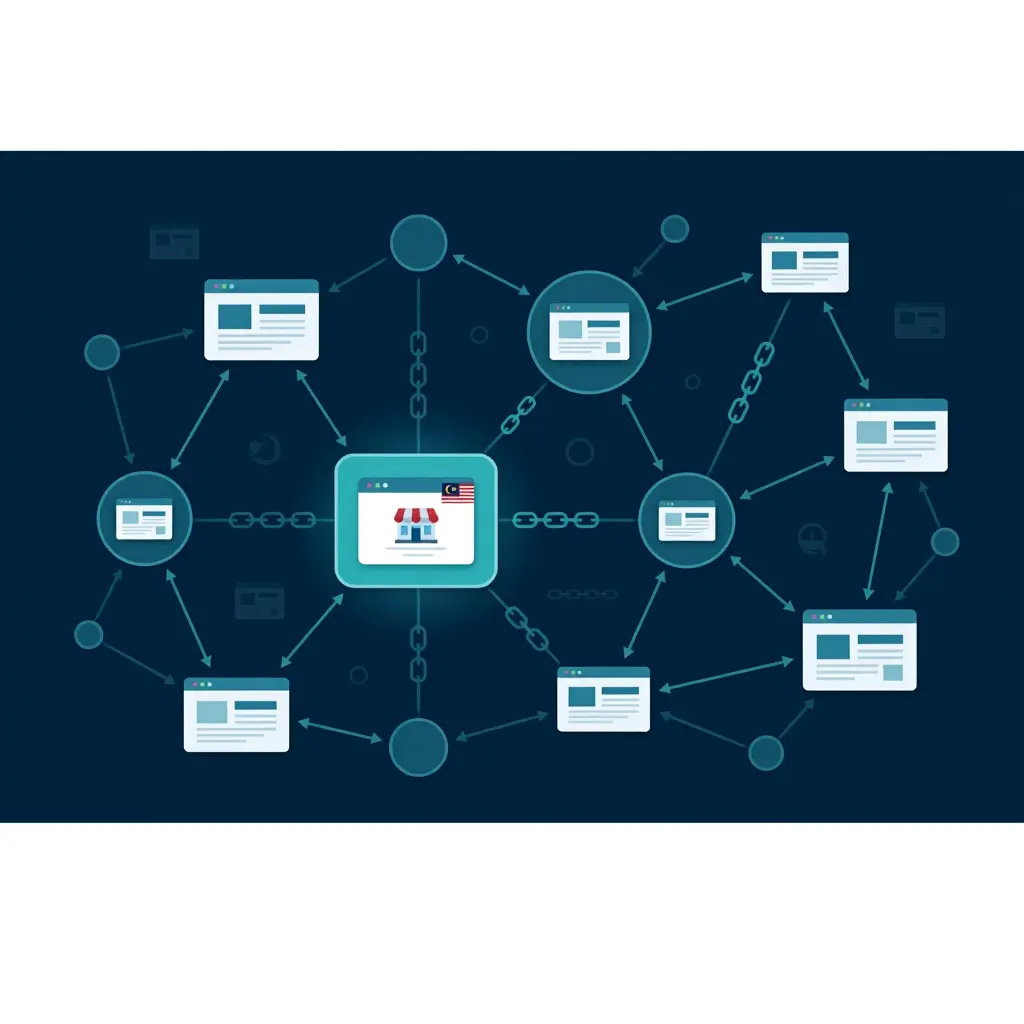
Backlinks remain one of the most powerful ranking signals in Google's algorithm. When a reputable Malaysian news portal, industry association, or established website links to your business, Google treats it as a vote of confidence — and your rankings reflect that trust.
The challenge is that link building is also the area of SEO most prone to dangerous shortcuts. Buying links, joining link farms, and participating in reciprocal link schemes can earn a Google penalty that removes your website from search results entirely. This guide covers only safe, sustainable strategies that build real authority for Malaysian businesses — without the risk.
Why Backlinks Matter for SEO
Google was built on the concept that a link from one website to another is an endorsement. The original PageRank algorithm ranked pages based on how many other pages linked to them, weighted by the authority of those linking pages. Over two decades later, backlinks remain one of Google's top-three ranking signals.
The intuition is sound: if 50 reputable Malaysian websites link to your accountancy firm's article on SST registration, those endorsements signal that your content is genuinely authoritative. A website with no backlinks — regardless of how good its content is — will struggle to rank for competitive keywords against websites with established link profiles.
For local Malaysian searches, local relevance also matters. A backlink from a respected Malaysian business publication carries more weight for Malaysian search results than a link from an unrelated international website.
What Makes a Quality Backlink?
Not all links are equal. The factors that determine a backlink's value:
- Domain Authority (DA) / Domain Rating (DR) — a link from a high-authority website (e.g. The Edge Malaysia, SME Corp, a major Malaysian university) is worth far more than a link from a newly registered blog.
- Relevance — a link from a website in your industry is more valuable than one from an unrelated niche. A link from a Malaysian marketing blog to an SEO consultant's website is highly relevant; a link from a Malaysian food blog is less so.
- Placement — links embedded naturally within the body content of an article are more valuable than links in footers, sidebars, or site-wide navigation.
- Anchor text — the clickable text of the link. Descriptive anchor text (e.g. "SEO consultant Kuala Lumpur") carries more ranking signal than generic text like "click here".
- Follow vs. nofollow — standard followed links pass ranking authority. Nofollow links (marked with
rel="nofollow") pass less direct authority, but still generate traffic and brand visibility.
Safe Link Building Strategies for Malaysian Businesses
1. Local Directory and Citation Listings
Claiming your listings in reputable Malaysian and international business directories is the safest, most accessible link building starting point. Key directories for Malaysian businesses include Yellobiz (Yellow Pages Malaysia), SME Corp directory, MATRADE, MDEC listings, and relevant industry-specific directories. These links also build local SEO citation signals simultaneously.
2. Guest Posting on Relevant Malaysian Publications
Writing genuine, high-value articles for reputable Malaysian publications and industry blogs earns contextual backlinks while building brand authority. Target publications that are genuinely read by your audience — SME-focused media, industry associations, Malaysian business blogs — not low-quality "guest post farms" that accept any content in exchange for links. The content must be genuinely useful to that publication's readers.
3. Digital PR and Media Mentions
When Malaysian news publications, blogs, and podcasts cover your business — whether through a product launch, expert commentary, industry data, or a compelling story — they often link to your website. Building media relationships and proactively pitching stories to relevant Malaysian journalists is a sustainable way to earn high-authority links. Expert commentary on SEO trends in Malaysian business media, for example, earns both links and brand visibility.
4. Content Worth Linking To
The most sustainable link building strategy is creating content that other websites naturally want to reference. Original research, industry surveys, comprehensive guides, and unique data sets attract links without any outreach required. For Malaysian businesses, this might mean publishing original data on consumer behaviour, pricing benchmarks, or industry trends that other publications cite. This is why content marketing and link building are inseparable parts of the same strategy.
5. Local Sponsorships and Community Involvement
Sponsoring local Malaysian events, sports teams, school programmes, or community initiatives typically earns a mention and link on the event or organisation's website. These links are genuine, relevant, and difficult to replicate — giving them strong authority signals. Examples include sponsoring a Kuala Lumpur SME conference, a university entrepreneurship programme, or a local charity run.
6. Business Partnerships and Supplier Networks
Your existing business relationships are an underutilised link source. Suppliers, distributors, professional partners, industry associations, and referral partners can all link to your website from their own. A simple email to a business partner asking them to add a link to your website from their "Partners" or "Recommended Suppliers" page is one of the easiest links to earn.
7. Broken Link Building
Find pages on relevant Malaysian websites that link to content that no longer exists (a 404 error). Then offer your own equivalent content as a replacement. The website owner benefits by fixing a broken link; you gain a quality backlink. Tools like Ahrefs and Check My Links (a Chrome extension) can identify broken links on target websites.
8. Resource Page Inclusion
Many Malaysian industry associations, business schools, and government agencies maintain "Resources" or "Useful Links" pages that list helpful tools and guides. If your website has genuinely useful content, reaching out to have it included on relevant resource pages is a legitimate link building tactic.
Link Building Tactics to Avoid
These tactics risk a Google penalty that can remove your website from search results:
- Buying links — any payment, product, or service exchange for a link violates Google Guidelines. Google's link spam detection is sophisticated and improving continuously.
- Private Blog Networks (PBNs) — networks of websites created specifically to link to a target site. Google actively identifies and penalises PBN usage.
- Excessive reciprocal linking — "you link to me, I link to you" schemes are a clear manipulation signal when done at scale.
- Low-quality directory submissions — submitting to hundreds of generic directories that have no real audience or editorial standards adds little value and can be seen as manipulation.
- Comment spam — leaving links in blog comments or forum posts at scale is a spammy tactic that Google ignores or penalises.
How to Measure Link Building Progress
Track link building progress with these metrics:
- Referring domains — the number of unique websites linking to yours. Growing this number over time is the primary measure of link building progress.
- Domain Rating (DR) / Domain Authority (DA) — third-party metrics (Ahrefs DR, Moz DA) that estimate your website's overall link authority. These should grow over time as you earn quality links.
- Organic keyword rankings — ultimately, the measure of whether link building is working is whether your target keywords rank higher. Track rankings monthly for your primary and secondary keywords.
- Organic traffic — the end result. More and better links should translate into higher rankings and more organic traffic over time.
Before investing significantly in link building, ensure your website's technical and on-page SEO is in order. An SEO audit confirms your site is ready to benefit from the authority you are building.
Frequently Asked Questions
What is link building in SEO?
Link building is the process of earning hyperlinks from other websites pointing to your website. These backlinks signal trust and authority to Google — the more quality links you have, the more authoritative your website appears, which translates into higher rankings for competitive keywords.
How many backlinks do I need to rank in Malaysia?
There is no fixed number. What matters is quality and relevance relative to your competitors. In less competitive Malaysian niches, 10 to 20 quality backlinks from relevant local and industry websites may be sufficient. In competitive industries like finance, property, or legal, you may need hundreds of high-quality referring domains. Use Ahrefs or Semrush to analyse competitor backlink profiles and understand what you are competing against.
Is it safe to buy backlinks for my Malaysian website?
No. Buying backlinks violates Google's guidelines and risks a manual penalty that can remove your website from search results entirely. Google's link spam algorithms are sophisticated and continuously improving. The short-term ranking gains from purchased links are not worth the risk of a penalty that can take months or years to recover from.