
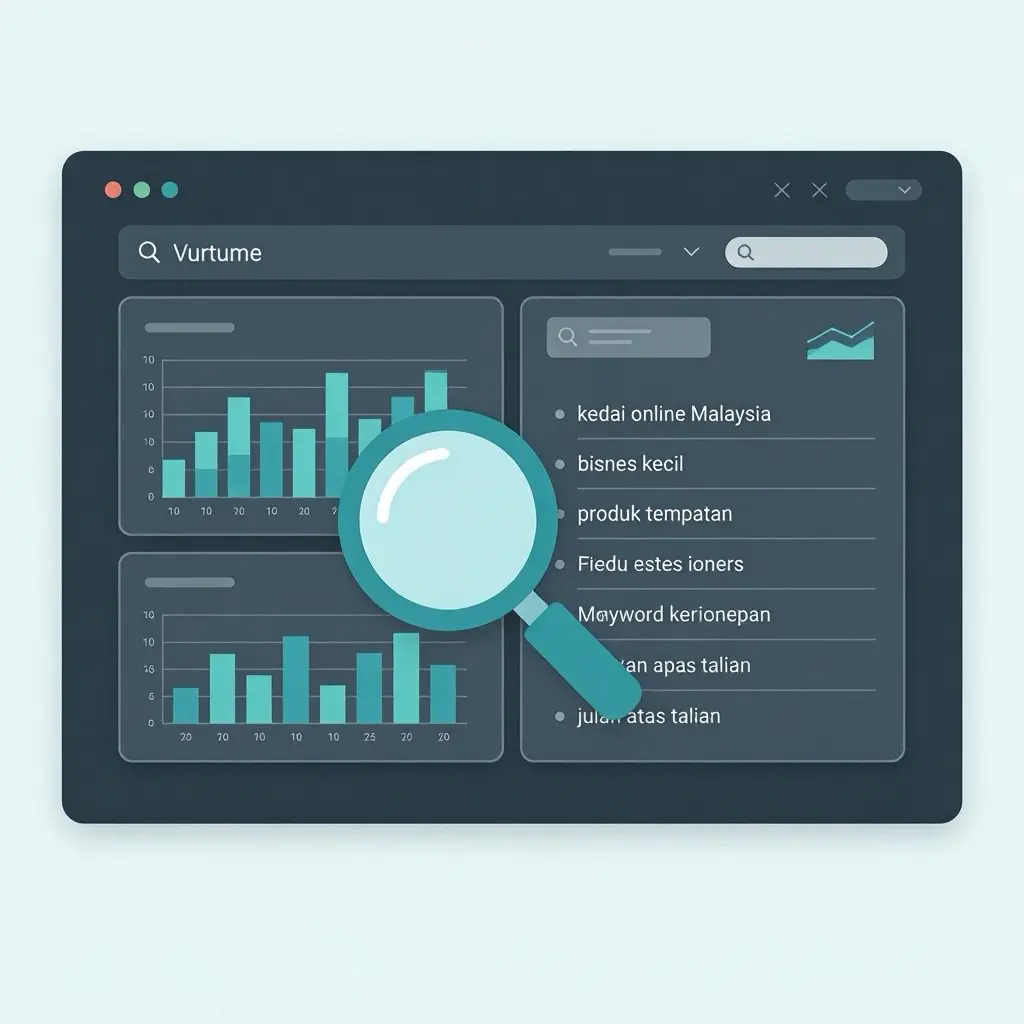
Most Malaysian businesses make the same keyword research mistake: they optimise their website for the terms they think their customers search for, rather than the terms those customers actually use. The result is content that ranks for nothing, or worse — content that ranks for terms no one searches for.
Keyword research solves this by grounding your SEO strategy in real data. This guide walks through the process step by step, with specific considerations for the Malaysian market including bilingual search behaviour and local intent.
What Is Keyword Research?
Keyword research is the process of finding and analysing the words and phrases your target customers type into Google when searching for your products or services. It answers three critical questions:
- What are people searching for? — The actual words and phrases, not what you assume they use.
- How many people search for it? — Search volume tells you whether a keyword is worth targeting.
- How difficult is it to rank for? — Keyword difficulty tells you whether your website can realistically compete for that term.
Good keyword research is the foundation of every other SEO activity. It informs your content strategy, guides on-page optimisation, and ensures your SEO efforts are directed at terms that will actually drive business.
Step 1: Understand Search Intent
Before researching specific keywords, understand the four types of search intent — because the intent behind a search determines what content should rank for it:
- Informational — the searcher wants to learn something. Example: "how does SEO work". Best matched by guides, explainers, and educational articles.
- Navigational — the searcher wants to find a specific website or brand. Example: "SEO.Entertop.my". These are brand searches — you should rank automatically for your own brand.
- Commercial investigation — the searcher is comparing options before buying. Example: "best SEO agency Kuala Lumpur". Best matched by comparison pages, case studies, and service overview pages.
- Transactional — the searcher is ready to take action. Example: "hire SEO consultant Malaysia". Best matched by service pages and landing pages with a clear CTA.
Your website needs content targeting all four types — informational content attracts early-stage buyers, while transactional content converts ready buyers. Mapping your keywords to intent before creating content prevents mismatch (e.g. a product page trying to rank for an informational query).
Step 2: Build Your Seed Keyword List
Start by brainstorming seed keywords — broad terms that describe your core products or services. Do not worry about search volume yet; this is just a starting list.
Sources for seed keywords:
- Your own service descriptions — what do you call what you offer?
- Your customers — what exact words do they use when describing their problem?
- Your competitors — what terms appear in their page titles and headings?
- Google Search Console — if your site is live, what queries are you already appearing for?
- Google Suggest — start typing a relevant term in Google and note the autocomplete suggestions.
For a Malaysian accountancy firm, seed keywords might include: "accountant Malaysia", "accounting services Kuala Lumpur", "tax filing Malaysia", "company secretary Malaysia", "audit services SME".
Step 3: Use Keyword Research Tools
Tools expand your seed list into hundreds of specific keyword variations, each with search volume and difficulty data.
Free Tools for Malaysian Businesses
- Google Search Console — shows what queries your site already ranks for and their impression/click data. Start here if your website is already live.
- Google Keyword Planner — free with a Google Ads account. Shows search volume ranges and competition levels for Malaysian searches.
- Google Suggest and People Also Ask — type your seed keywords into Google and note the autocomplete suggestions and "People also ask" questions. These are real searches from real users.
- Ubersuggest — a free-tier tool by Neil Patel that shows keyword ideas, volume estimates, and difficulty scores.
Paid Tools (More Accurate Data)
- Ahrefs — industry standard for keyword research and competitor analysis. Particularly strong for Malaysian keyword data.
- Semrush — strong keyword research combined with competitor analysis and site audit tools.
- Moz Keyword Explorer — user-friendly keyword difficulty scoring.
Step 4: Analyse Keyword Difficulty and Competition
Not all keywords are equally winnable. Before committing to a target keyword, assess how realistic it is for your website to rank for it.
Key factors to assess:
- Keyword Difficulty (KD) score — most tools give a 0 to 100 difficulty score. New websites should target KD 0 to 30; established websites can target KD 30 to 60; high-authority sites can compete at KD 60+.
- Who is currently ranking — search the keyword and look at page 1. If the top results are all established global brands or high-authority Malaysian portals, ranking quickly will be very difficult. If you see smaller, newer websites, it is a winnable keyword.
- Content type on page 1 — if page 1 is all listicles and your plan is a service page, Google may not want to rank a service page for that keyword. Match your content type to what is already ranking.
Step 5: Prioritise Your Keywords
With a long list of keyword opportunities, prioritisation is essential. Score keywords across three dimensions:
- Business value — how directly does ranking for this keyword drive leads or revenue? Transactional keywords have high business value; purely informational keywords are lower but still contribute to the funnel.
- Search volume — higher volume means more potential traffic, but also usually more competition. Do not ignore low-volume keywords with high business value — 50 highly targeted visitors can be worth more than 5,000 irrelevant ones.
- Ranking feasibility — given your current domain authority, what keywords can you realistically rank for in 3 to 6 months?
For most Malaysian SMEs starting out, the sweet spot is long-tail keywords — specific, multi-word phrases like "SEO consultant for e-commerce Malaysia" rather than "SEO Malaysia". They have lower search volume but lower competition, clearer intent, and faster ranking timelines. Building a foundation on long-tail wins creates the domain authority needed to later compete for broader terms.
Keyword Research for the Malaysian Market: Bilingual Considerations
Malaysia's multilingual market creates unique keyword opportunities that many businesses miss.
English Keywords
English-language keywords in Malaysia tend to have higher commercial intent, particularly in B2B, professional services, and higher-income consumer segments. Competition is often significant, with international brands competing in the same space.
Bahasa Malaysia Keywords
Bahasa Malaysia keywords are underserved by many businesses, creating real ranking opportunities. Searches like "cara buat SEO website", "ejen hartanah Johor Bahru", or "kedai baiki kereta near me" can have substantial search volume with far less competition than their English equivalents. If your audience includes Malay-speaking Malaysians outside urban centres, Bahasa Malaysia keywords are a high-opportunity area.
Mixed Language Terms
Many Malaysians search in a mix of languages and colloquialisms — "best accounting firm KL murah", "website design untuk kedai online". These mixed searches are often underexplored by SEO strategies that focus only on clean English or Bahasa Malaysia terms.
Common Keyword Research Mistakes Malaysian Businesses Make
- Targeting only broad, high-competition keywords — "accounting Malaysia" is nearly impossible to rank for as a new website; "accounting firm for startup Kuala Lumpur" is achievable.
- Ignoring search intent — creating a product page for an informational query will never rank because Google wants educational content in that position.
- Keyword cannibalism — multiple pages targeting the same keyword compete against each other and dilute rankings. Each page should have a unique primary keyword target.
- Guessing instead of researching — what you think customers search for is often not what they actually search for. Always validate with real search volume data.
- Targeting only English — missing Bahasa Malaysia keyword opportunities leaves a significant portion of Malaysian search volume unaddressed.
Once you have your keyword list, the next step is building a content marketing strategy that puts those keywords to work systematically.
Frequently Asked Questions
What is keyword research in SEO?
Keyword research is the process of identifying the words and phrases your target customers use when searching on Google. It guides which topics to create content around, which terms to optimise existing pages for, and helps you understand how competitive the ranking landscape is for your business.
What free keyword research tools can Malaysian businesses use?
Google Search Console is the best free starting point — it shows actual queries driving traffic to your site. Google Keyword Planner provides volume data with a free Google Ads account. Google Suggest (autocomplete) and the People Also Ask box give direct insight into what Malaysian searchers are looking for. Ubersuggest offers a free tier with basic keyword ideas and difficulty scores.
Should I target Bahasa Malaysia or English keywords?
Both, if possible. English keywords generally have higher commercial intent in B2B and professional services. Bahasa Malaysia keywords often have less competition and significant search volume, particularly for B2C products and services targeting broader Malaysian audiences. The right balance depends on who your customers are and how they search.