
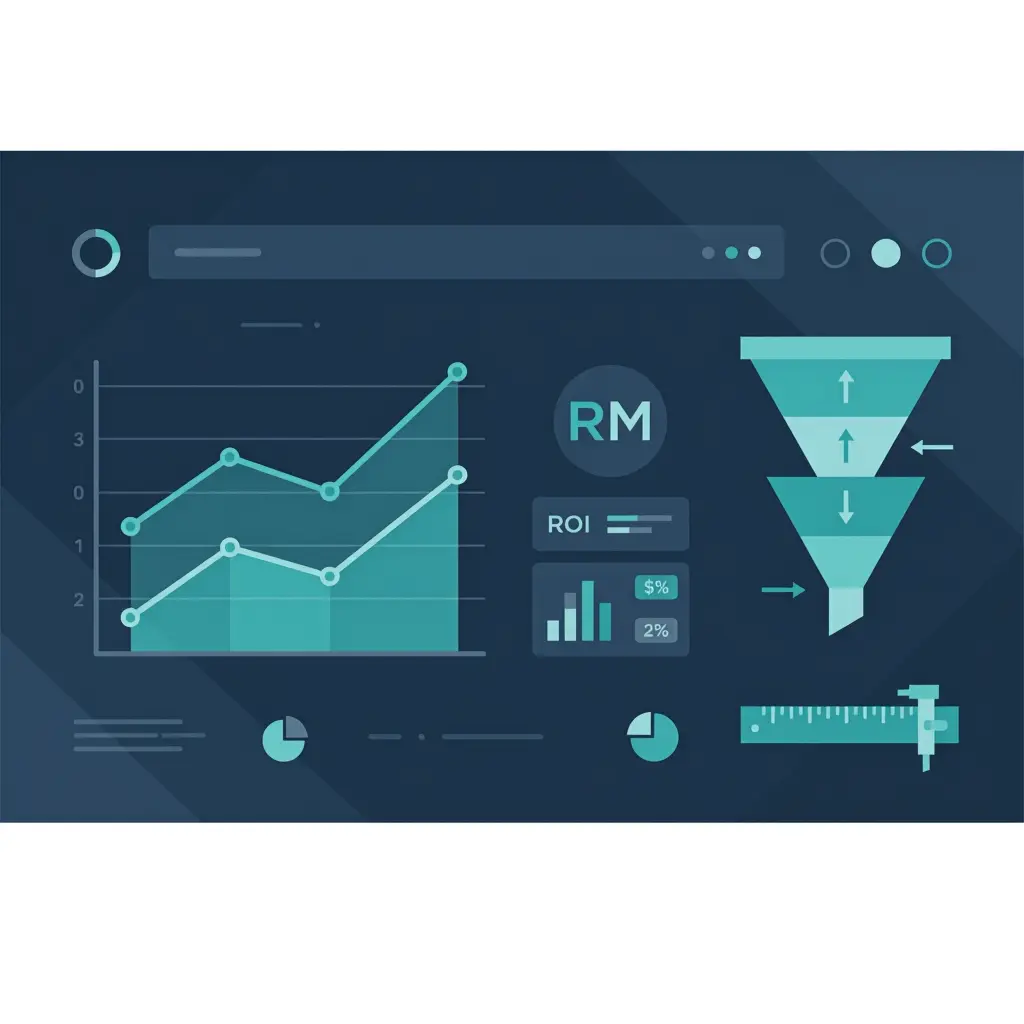
"We have been doing SEO for 6 months. Is it working?" Malaysian business owners ask this question constantly — and the frustrating reality is that many cannot answer it, not because SEO is not delivering, but because the measurement infrastructure is not in place to see it.
Measuring SEO ROI is more complex than measuring paid advertising ROI, but it is entirely achievable. This guide walks through what to measure, how to set up tracking correctly, and how to calculate the actual return on your SEO investment — including realistic expectations for Malaysian SMEs.
Why SEO ROI Is Different from Paid Ads ROI
With Google Ads, every click is tracked. Every conversion is attributed. ROI is straightforward to calculate: revenue generated minus ad spend, divided by ad spend.
SEO is more complex for several reasons:
- Attribution lag — a prospect may first find you via organic search, then return directly to enquire weeks later. The SEO-originated visit may not be credited for the conversion.
- Offline conversions — many Malaysian businesses convert via phone calls, WhatsApp enquiries, or walk-ins that are never tracked digitally. A visitor who finds you on Google and then calls you directly is an SEO conversion that is invisible to standard analytics.
- Brand building value — SEO builds brand awareness, trust, and authority that contributes to conversions across all channels. A prospect who has seen your content multiple times before converting via a different channel is partly an SEO-influenced conversion.
- Compounding returns — SEO delivers increasing returns over time from the same investment. An article written 18 months ago may generate more leads today than it did in its first month. This makes point-in-time ROI calculations misleading.
Despite these complexities, there is enough measurable data to make informed investment decisions. The key is setting up measurement correctly from the start. If you are just beginning your SEO journey, read our introduction to SEO for Malaysian businesses first.
Setting Up SEO Measurement Before You Start
Before you can measure SEO ROI, you need a baseline and the right tools in place. The sooner you set this up, the more useful your data will be.
Step 1: Google Analytics 4 (GA4)
GA4 is the foundation of website measurement. It tracks where your visitors come from, what pages they visit, and — critically — what actions they take (form submissions, page views, button clicks). Set up GA4 on your website immediately if it is not already in place. Without it, you are flying blind.
Configure conversion events in GA4 for every action that represents a lead: contact form submissions, WhatsApp click-throughs, phone number clicks, email address clicks, and quote request buttons. Each of these is a tracked SEO conversion.
Step 2: Google Search Console
Google Search Console (GSC) is a free tool that shows exactly which queries are bringing visitors to your website, which pages they land on, what your average ranking positions are, and how your click-through rates are changing over time. It is essential for understanding organic search performance and tracking ranking progress.
Step 3: Record Your Baseline
Before SEO work begins, document your current state: organic traffic volume (from GA4), keyword positions for your target terms (from GSC or a rank tracking tool), number of organic conversions per month, and your current domain rating (from Ahrefs or Moz). This baseline is essential for measuring progress.
The Key Metrics to Track for SEO ROI
1. Organic Traffic
Track monthly organic sessions in GA4. Compare month-over-month and year-over-year. A sustained upward trend in organic traffic is the clearest indicator that SEO is working. Look at overall organic traffic growth, but also drill into which pages and keywords are driving that growth.
2. Keyword Rankings
Track your target keywords' position on Google weekly or monthly using Google Search Console (free) or a rank tracker like Ahrefs, Semrush, or AccuRanker. Focus on keywords with commercial value to your business — not just traffic volume. Movement from position 15 to position 6 for a high-value keyword is a significant SEO win even if traffic has not yet surged.
3. Organic Conversions
In GA4, filter your conversion events by organic traffic source. This shows you how many leads, form submissions, or enquiries originated from organic search. This is the most direct measure of SEO's business impact. Track this monthly and compare to your baseline.
4. Cost Per Organic Lead
Divide your monthly SEO investment (consultant fees, content costs, tools) by the number of organic leads that month. As your rankings and traffic grow while your SEO investment remains relatively stable, the cost per organic lead should decrease over time — becoming significantly lower than your cost per lead from paid advertising.
5. Revenue from Organic Traffic
If you can track which leads converted to customers and at what value, you can calculate direct revenue from organic search. For many Malaysian service businesses, this requires manual tracking — noting in your CRM or sales records how each new customer originally found you. Even rough tracking ("found us on Google" vs. "referral" vs. "social media") enables meaningful ROI calculation.
How to Calculate SEO ROI
Once you have conversion and revenue data, the formula is:
// SEO ROI Formula
ROI = (Revenue from Organic - SEO Investment) / SEO Investment × 100%
Example for a Malaysian B2B service business:
- Monthly SEO investment: RM3,000
- Organic leads per month: 15
- Lead-to-client conversion rate: 20% (3 new clients)
- Average contract value: RM5,000
- Revenue from organic: RM15,000
- SEO ROI: (RM15,000 - RM3,000) / RM3,000 × 100% = 400% ROI
This calculation becomes more compelling when you account for the compounding nature of SEO. In month 12, the same RM3,000 investment might generate 40 organic leads per month as rankings strengthen and content accumulates — pushing ROI significantly higher without proportional increases in spend.
Realistic SEO ROI Expectations for Malaysian SMEs
Setting honest expectations:
- Months 1 to 3: Investment phase. Little to no measurable ROI. Rankings begin moving; organic traffic may show early signs of growth. This is normal and expected.
- Months 4 to 6: Early returns. Organic leads begin arriving. ROI is positive but modest — perhaps 1x to 2x.
- Months 6 to 12: Growth phase. Organic traffic and leads grow meaningfully. ROI reaches 3x to 5x for well-executed strategies.
- Year 2+: Compounding returns. ROI of 5x to 15x is achievable for businesses in moderately competitive Malaysian markets with consistent content and optimisation work.
Businesses that measure SEO ROI only in the first 3 months and abandon the investment because returns are low are making a common and costly mistake. The compounding return structure means early patience is rewarded disproportionately. For a realistic timeline of when results arrive, read our guide on how long SEO takes to work for Malaysian businesses.
Tools for Measuring SEO ROI in Malaysia
- Google Analytics 4 — free, essential. Organic traffic, conversions, user behaviour.
- Google Search Console — free, essential. Keyword rankings, impressions, click-through rates.
- Ahrefs or Semrush — paid, powerful. Keyword rank tracking, backlink monitoring, competitor analysis.
- Google Looker Studio — free. Build SEO reporting dashboards combining data from GA4 and Search Console for easy monthly reporting.
- A simple spreadsheet — track monthly organic traffic, organic leads, new clients from organic, and SEO spend. Even without sophisticated tools, this data tells the ROI story clearly.
Frequently Asked Questions
How do you calculate SEO ROI?
SEO ROI = (Revenue from Organic Search - Total SEO Investment) / Total SEO Investment x 100%. To calculate this accurately, you need GA4 configured to track conversions by traffic source, a way to estimate the revenue value of organic leads (either from closed deals or average lead values), and a complete record of your SEO spend including consultant fees, content, and tools.
What is a good SEO ROI for Malaysian businesses?
A well-executed SEO strategy typically delivers 3x to 10x ROI over a 12 to 24-month period for Malaysian SMEs. The compounding nature of organic rankings means ROI continues to improve over time — the same content investment generates increasing returns as domain authority grows and more keywords rank.
Why is my SEO not generating leads?
If SEO is generating traffic but not leads, the problem is usually one of three things: the traffic is informational rather than commercial (you are attracting people researching, not buying), the landing pages have weak or unclear calls to action, or there is a mismatch between visitor intent and what your page offers. An audit of your highest-traffic organic pages against conversion data will identify where the gap is.